
Dental veneers are thin ceramic shells bonded to the visible surface of the teeth. They can change the colour, the shape or the length of the front teeth, while preserving as much of the natural tooth as possible.
At ORALYS, each veneer project is reviewed by the team: gum health, tooth alignment and the bite are assessed before a treatment plan is proposed.
When are veneers recommended?
- Discoloured or greyish teeth that do not lighten enough with whitening (fluorosis, long-standing stains…)
- Irregularly shaped, short or worn teeth
- Small gaps between the teeth (diastemas)
- Slightly chipped or fractured teeth
- Old composite fillings that are damaged or discoloured
Ceramic veneers
Ceramic veneers are made in the dental laboratory. Their shade remains stable over time and they closely resemble natural enamel.
The treatment steps
- Consultation and assessment : clinical examination, photographs and X-rays if needed. Any decay or gum problems are treated first.
- Smile design : your future smile is designed from photographs and a digital impression (intraoral scanner). An in-mouth trial (mock-up) lets you see the result and adjust it before any preparation.
- Tooth preparation : guided by the smile design, it is usually limited to the enamel, a few tenths of a millimetre deep.
- Temporary try-in : temporary veneers are placed to validate the aesthetics in the mouth (shape, length, shade) before the final veneers are made.
- Bonding : after a try-in and shade confirmation, the veneers are bonded and the bite is checked.
A case treated at our clinic
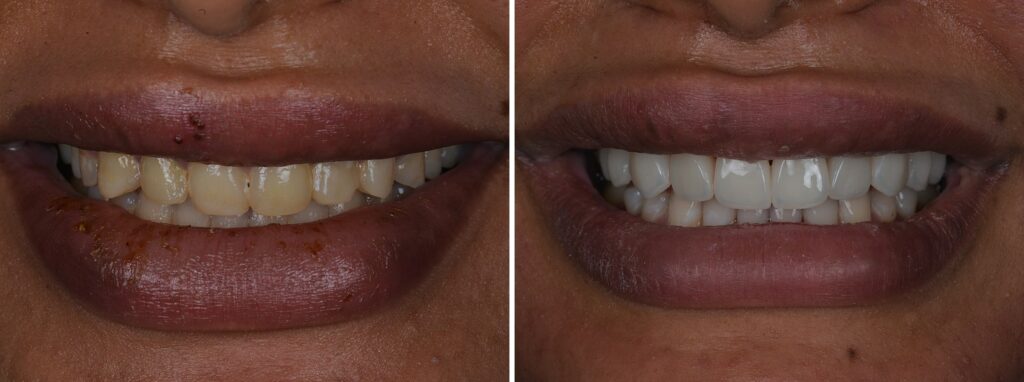
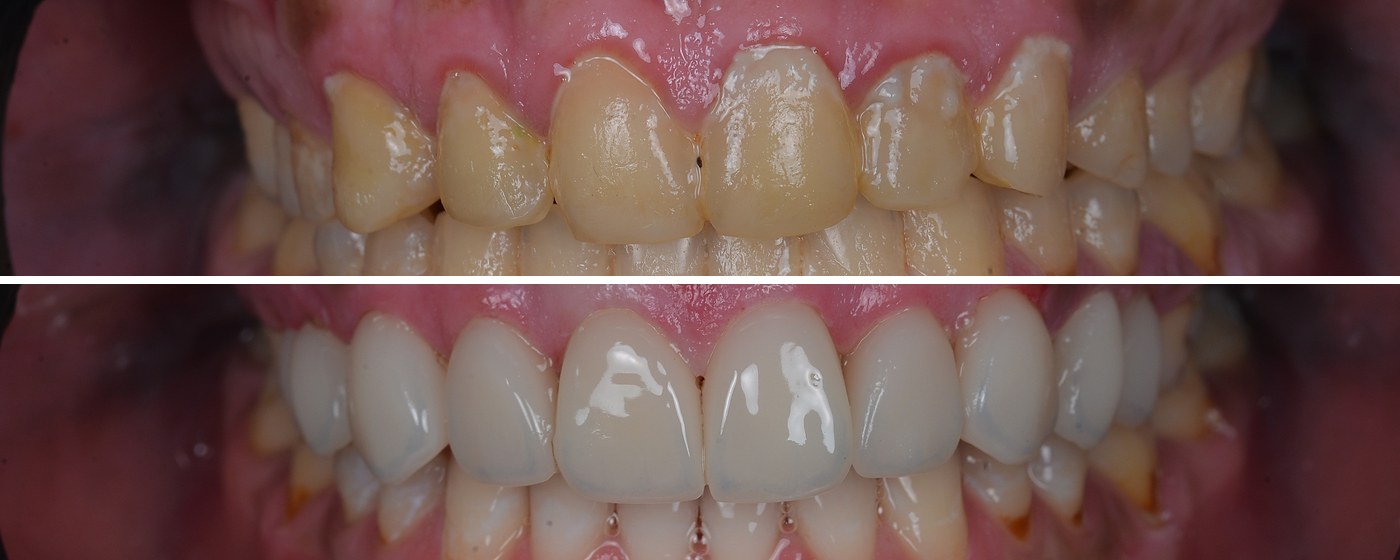
This patient wanted to improve the colour and shape of her upper teeth. After the case was reviewed by the team, she was treated with veneers. The photo at the top of the page shows her smile before (left) and after (right); below is the front view.
Care and longevity
Veneers are cared for like natural teeth: brushing twice a day, floss or interdental brushes, and regular check-ups at the clinic. Avoid biting on hard objects (pens, nails, fruit stones). If you clench or grind your teeth, a night guard protects the veneers.
With good care, ceramic veneers can last for many years.
Frequently asked questions
Is getting veneers painful?
No. Preparation is done under local anaesthesia if needed. Mild sensitivity may occur for a few days.
Do veneers damage the teeth?
Preparation is usually minimal and limited to the enamel. It is, however, permanent: a prepared tooth will always need to be protected by a veneer.
Should the teeth be whitened first?
It is often recommended, because ceramic does not whiten: the natural teeth are lightened first, then the shade of the veneers is chosen to match. Read our article on teeth whitening →
Veneers or orthodontics?
When teeth are misaligned, orthodontic treatment beforehand (for example with clear aligners) can often reduce, or even avoid, tooth preparation. Read our article on orthodontics →
Do you live abroad? Find out how to organise your treatment at Oralys: remote assessment, preliminary quote and stay plan →
Book an appointment
Book a consultation at the Oralys clinic, Lac 2, Tunis: on WhatsApp or by phone on +216 96 883 443.