
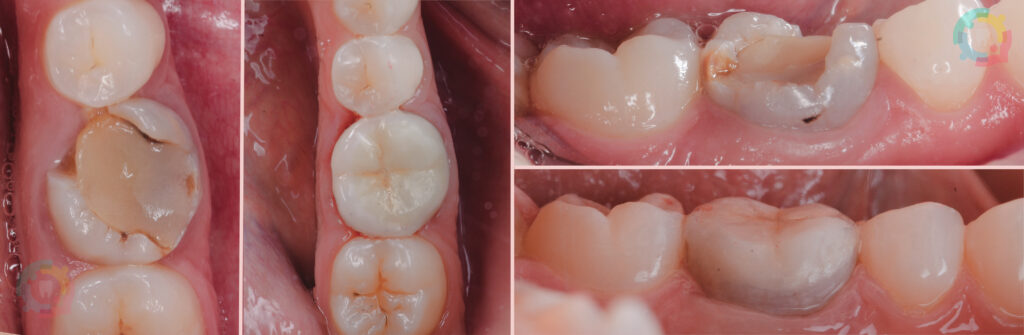
adhesive dentistry repairs a damaged tooth while preserving as much of it as possible. Instead of drilling down the whole tooth to fit a crown, a custom-made piece is bonded: theonlay oroverlay, which replaces only the missing part. At the Oralys dental practice in Tunis, this modern, conservative approach is at the heart of our restorations.
What is adhesive dentistry?
Adhesive dentistry is based on bonding : thanks to today's adhesives and materials, a restoration can hold firmly on the tooth without needing mechanical retention shapes. Only the diseased tissue is removed and all the healthy tissue is kept.
Dental onlays and overlays: what is the difference?
- Onlay: replaces part of the tooth, for example one or more damaged cusps (the points of the tooth), keeping the rest.
- Overlay: covers the whole chewing surface to protect all the cusps, without completely surrounding the tooth like a crown.
Made of ceramic or composite, they reproduce the shade and translucency of the natural tooth.
When are they indicated?
- replacing large, damaged fillings (amalgam or composite);
- a weakened, cracked or fractured tooth;
- restoration after root canal treatment ;
- a wish for a less invasive solution than a crown.
Advantages of adhesive dentistry over crowns
- Conservative: a crown requires extensive drilling of the tooth; onlays and overlays preserve healthy tissue.
- Natural appearance: the restoration blends into the tooth and the smile.
- Less risk to the nerve: lighter preparation better protects the dental pulp.
- Precision and comfort: each piece is custom-made for a precise fit.
- Durability: when well cared for, these restorations last for many years.
Limitations to be aware of
- A demanding technique: bonding requires great rigour (isolating the tooth, a precise protocol).
- Cost: higher than a standard filling, but for a longer-lasting solution.
- Severe bruxism: for patients who clench or grind their teeth heavily, another option may be preferable.
- Temporary sensitivity: slight sensitivity may appear after fitting and usually disappears quickly.
How is an onlay or overlay fitted at Oralys?
- Diagnosis: examination and X-ray to confirm that an onlay or overlay is the best option.
- Preparation: the damaged areas are removed while preserving as much healthy structure as possible.
- Impression: conventional or digital, for a perfectly fitting piece.
- Custom fabrication: in the laboratory or at the practice using CAD/CAM (computer-aided design and manufacturing).
- Bonding: the restoration is firmly bonded to the tooth.
- Finishing: bite adjustment and polishing for a natural result.
Adhesive dentistry is not limited to onlays: it can also replace a missing tooth with a bonded bridge, without drilling the neighbouring teeth. When the tooth cannot be saved, adental implant remains a long-lasting solution.
FAQ – Onlays, overlays and adhesive dentistry
How long does an onlay last?
A well-made, well-maintained onlay or overlay can last many years, provided you keep up good hygiene and regular check-ups.
Is fitting painful?
No, preparation is done under local anaesthesia if needed. Slight sensitivity may occur for a few days after fitting.
Onlay or crown: which should you choose?
When enough healthy tooth remains, an onlay or overlay is generally preferred because it is more conservative. A crown is still indicated for very damaged teeth. The choice is made case by case during the consultation.
Ceramic or composite?
Ceramic offers excellent aesthetics and great wear resistance; composite is easier to repair. Your practitioner will advise you according to the tooth and your situation.
Book an appointment
Do you have a damaged tooth, a large filling to replace or a root-treated tooth to protect? Book an appointment at Oralys in Tunis via our contact page or on WhatsApp at +216 96 883 443.